Two decades of experience – on the mountains and underground
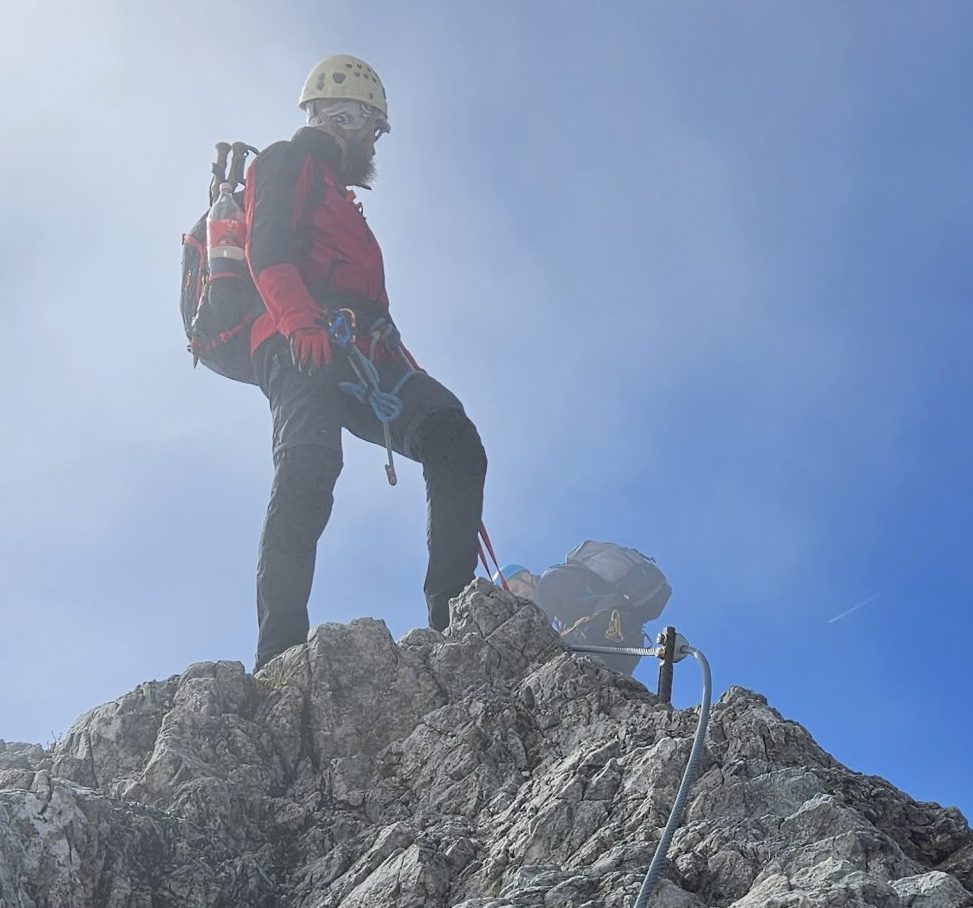
My name is Gergő Novotnik. I’ve been a member of the Hungarian Cave Rescue Service (BMSZ) for 20 years, and I’ve been doing via ferrata for the same amount of time – mainly in Austria, Italy and Slovenia. This parallel is no coincidence: the knowledge gained in caving and cave rescue can be applied directly to via ferrata.
In the cave rescue service
In Hungary, cave rescuers are not only trained in underground rescues, but also in evacuations from difficult-to-access terrain and via ferrata routes. As a member of BMSZ, I have regularly participated in real cave and surface rescue operations, including the world’s deepest international cave rescue ever performed, and I also take part in via ferrata rescue drills.
This means I know exactly:
- What climbers tend to do wrong when they get into trouble
- What to pay attention to during a rescue
- What extra equipment is worth carrying
- How to get yourself back to safety from a stuck situation
This is not just theoretical knowledge. It comes from training, from travelling thousands of meters on rope, and from real crisis situations.
Caving instructor
For 15 years I have been teaching cavers rope techniques, hauling systems and team rescue – all of which are essential parts of via ferrata rescue as well. In a cave, in the dark and difficult terrain, even a small mistake can be fatal. That’s why the training is strict, structured and takes no shortcuts.
I bring the same mindset to via ferrata instruction: clear theoretical background, and practical exercises that build on each other.
Don’t imitate – understand.
Experience on iconic routes
In recent years I have completed many legendary via ferrata routes in Italy and Austria – these are not tourist paths, but technical challenges. Through them, I learned and applied not only climbing skills but real crisis management as well.
What can you expect from me?
Training that is:
- Based on real rescue experience – we are not playing games; safety comes first
- Aware of the typical mistakes – because I’ve seen a lot
- Strict and disciplined – this is not something to take lightly
- Practical and clear – not just theory, but something you can apply instantly in a real situation
20 years. On rope, in caves, on rock, in rescue.
Via ferrata is not just a sport – it’s responsibility. Responsibility for ourselves and for our partners. This is the responsibility I aim to pass on to every student.